Making Pickles at the Community Cooking Circle in Sambaa K’e
by Danielle Bayne
Recently, the community of Sambaa K’e First Nation (SKFN) came together for a hands-on pickling session as part of a cooking circle initiative. Cooking circles are community-driven efforts that bring people together to grow, share, and preserve local food. This particular event was organized by Julian, the Environment Coordinator for SKFN (see Julian’ssocials below!) and was a great opportunity to engage in a shared activity while making use of the fresh produce from the community garden.
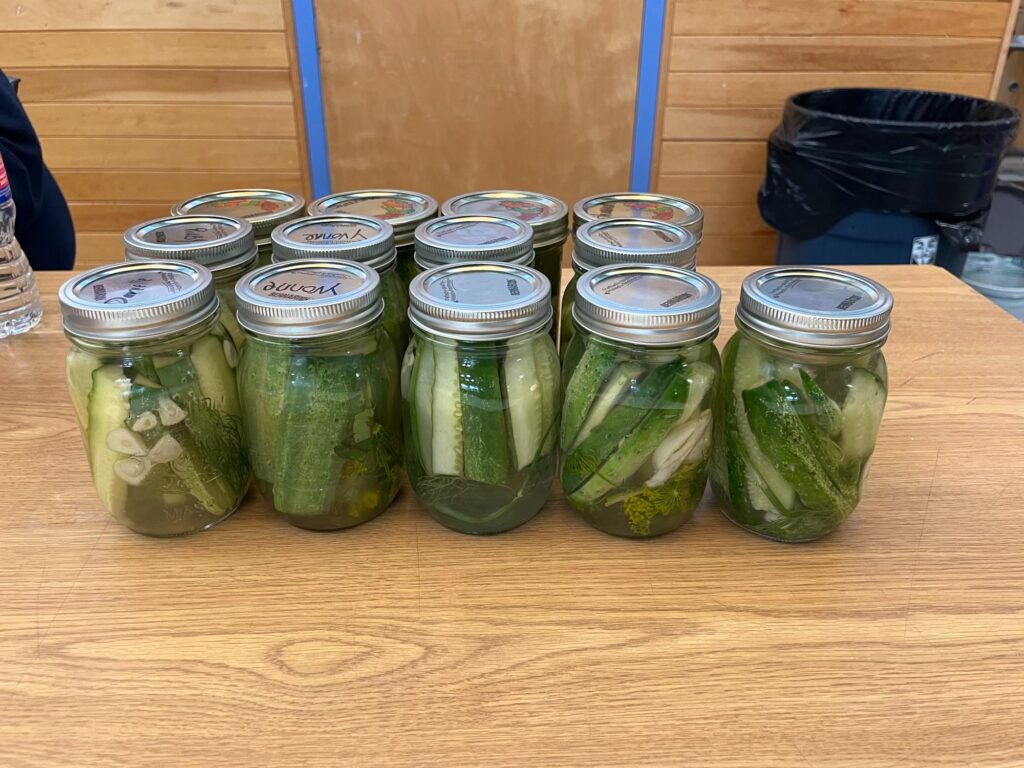
Some of the pickles we made in the community cooking circle
Harvesting the Ingredients
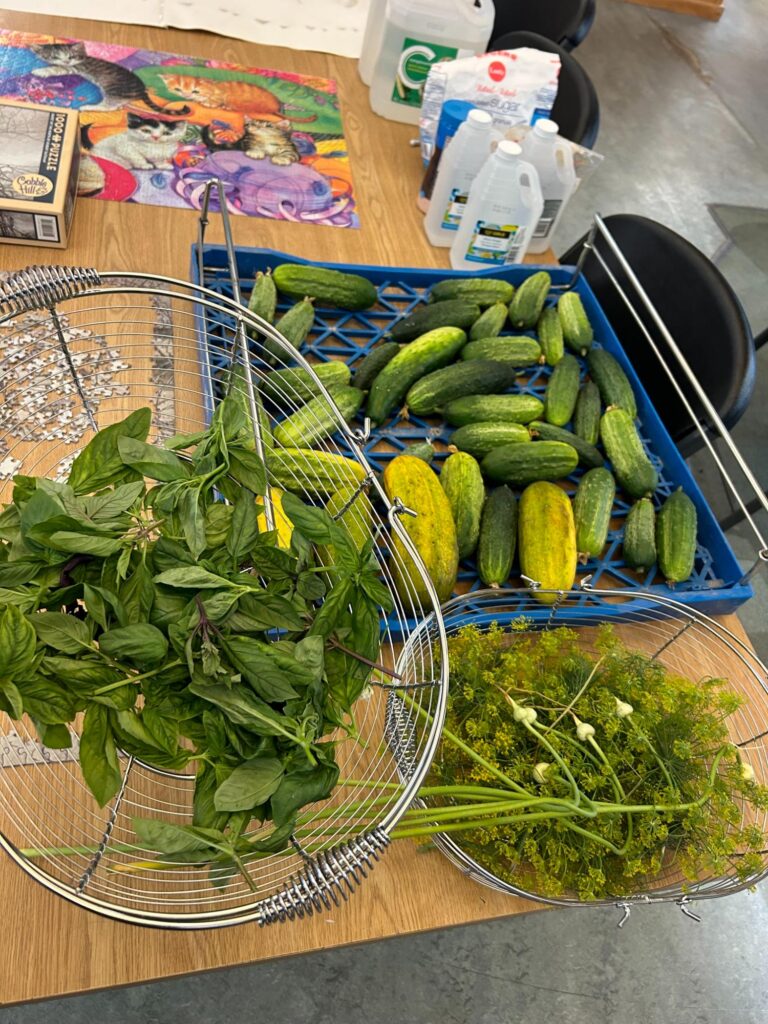
On the morning of the cooking circle, the gardening team, consisting of community members both young and old, harvested the cucumbers, dill, and garlic from the community garden in town. This collaborative effort set the stage for the evening’s activities, reinforcing the connection between the land and the food we enjoy. The community garden is more than just a source of fresh produce; it is a foundational aspect of the community’s food system. By growing a variety of vegetables and herbs, the community is able to enhance its food security, reducing reliance on external sources and ensuring a steady supply of nutritious food. The garden also serves as an educational resource, teaching valuable skills in gardening and food preservation to all ages.
Cucumbers, dill, garlic scapes, and basil from the community garden
The Pickling Process
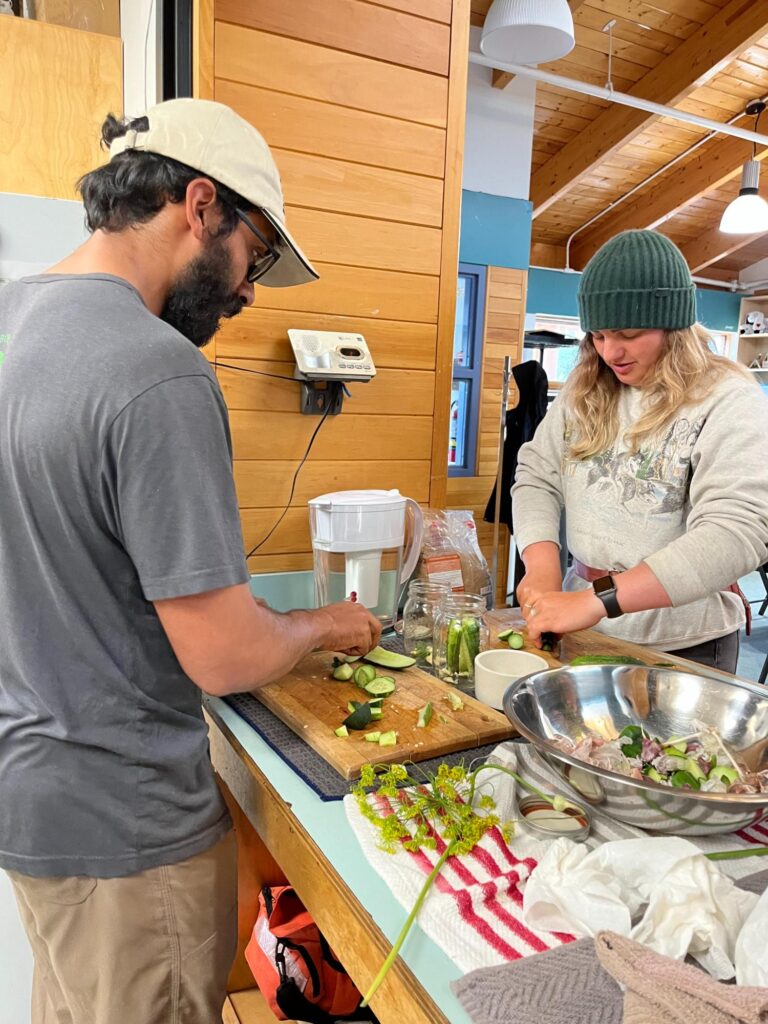
That evening, people were invited to meet at the community centre where the cooking circle was being held. Tables were set up, ingredients were laid out, and music filled the air, creating a welcoming environment for community members, employees, and researchers alike. The ingredients were cleaned and prepared—cucumbers were sliced into rounds or spears, dill was chopped, and garlic cloves were peeled and crushed. This preparation phase was straightforward, yet essential for ensuring that the pickles would be flavorful and well-preserved.
Narayan and Rebecca cutting cucumbers into spears and preparing other Ingredients
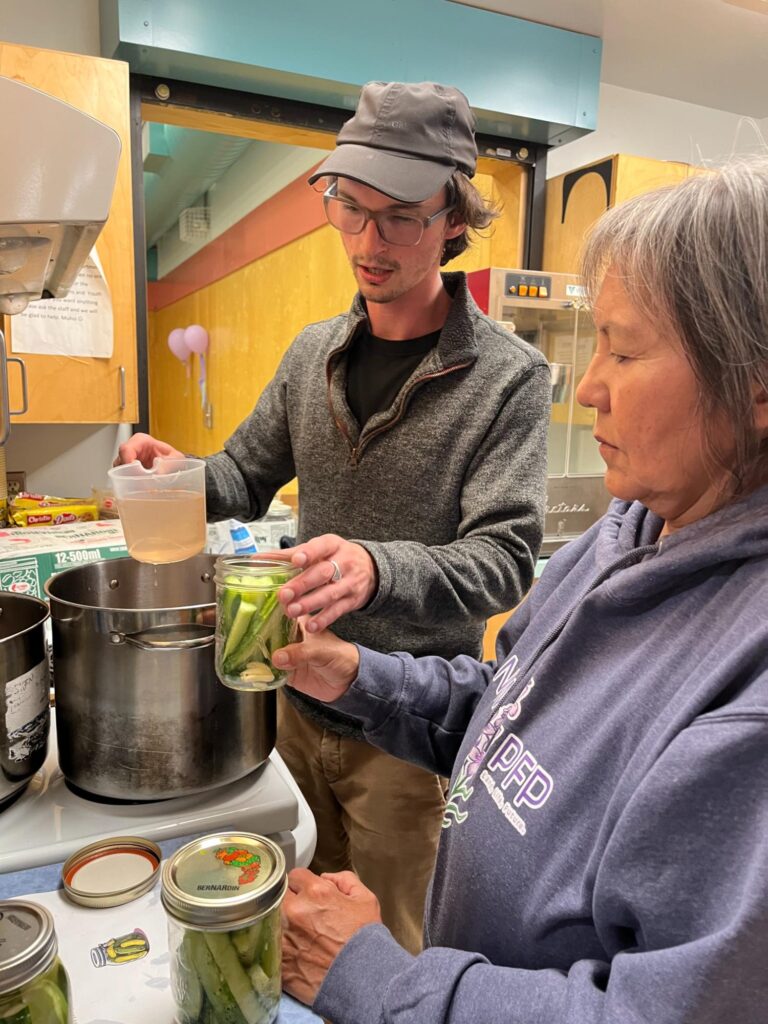
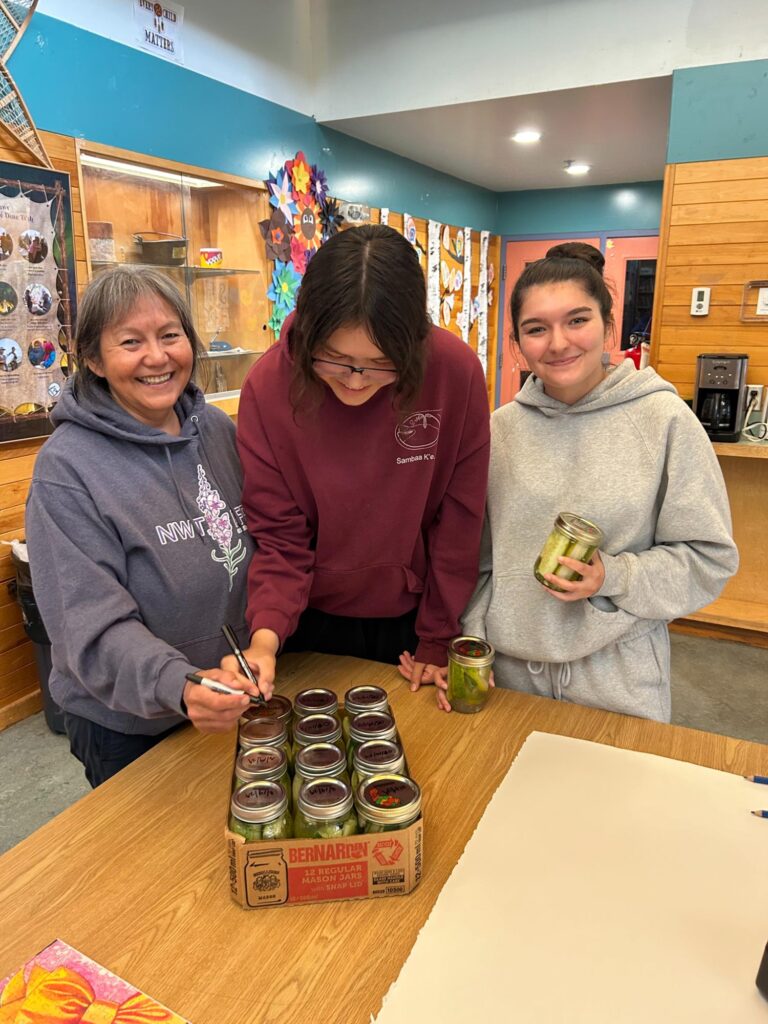
Once the cucumber spears were packed into jars with the other ingredients, we moved on to the brining station. Julian had prepared the brine in advance—a simple mixture of water, vinegar, sugar, and salt. The final step involved pouring the brine into each jar, ensuring the cucumbers were fully submerged, before sealing them tightly. Everyone then labelled and dated their jars, making them ready to take home and enjoy!
Julian and Ruby filling the jars with the brine
The Benefits of Community Food Circles
This event was not just about making pickles; it was about fostering community connections, sharing knowledge, and reinforcing sustainable practices. In addition to making jars for ourselves, we also prepared extra jars of pickles to share with those who couldn’t attend the cooking circle. These jars were taken to the community store, where they were made available for others to enjoy. This gesture ensured that everyone in the community, whether they participated in the event or not, could still share in the harvest and enjoy the results of our collective effort. It was a small way to extend the sense of connection and generosity that the cooking circle fostered.
Ruby, Shannon and I, labelling the pickle jars
By coming together to harvest, prepare, and preserve local food, the community not only strengthens its social bonds but also contributes to a more resilient food system. Such initiatives help to reduce reliance on external sources, enhance food security, and build local capacity, reinforcing the community’s commitment to self-sufficiency and sustainability.
A huge thanks to Julian, Aliya, Fayth, Ruby and so many more for making this event possible and allowing me to be a part of it! Mahsi Cho!